

Breaking the Code – the story of Alan Turing
By Hugh Whitemore
Directed by Steve Gerlach. November 2024
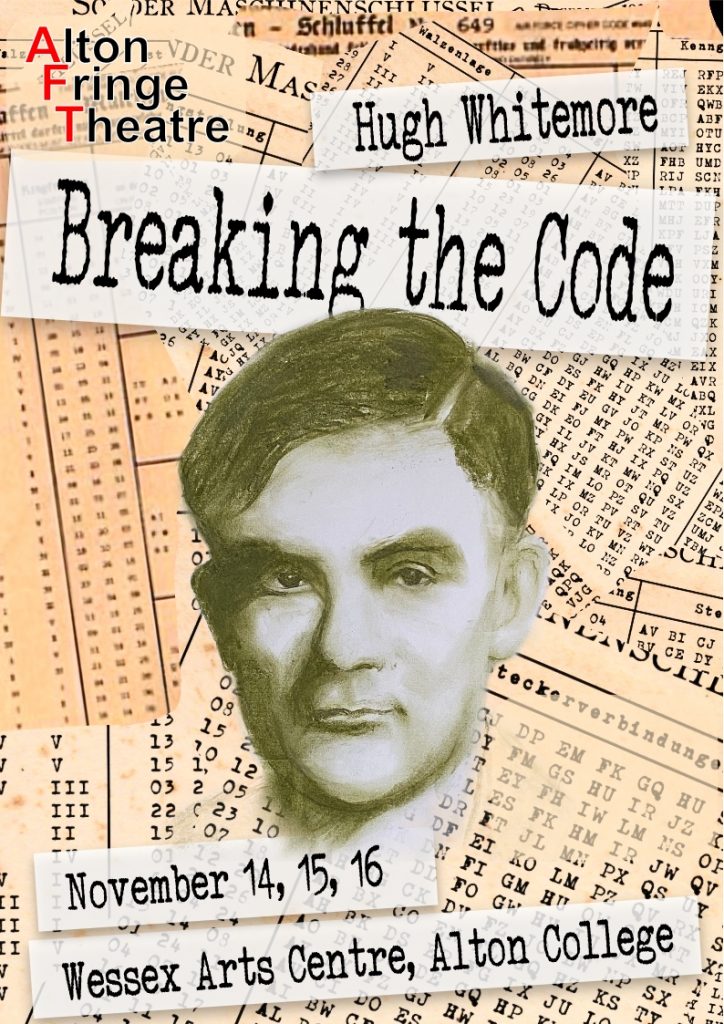
This exceptional biographical drama about a man who broke too many codes: the eccentric genius Alan Turing who played a major role in winning the World War II, breaking the complex German code called Enigma, and enabling allied forces to foresee German manoeuvres.
Since his work was classified top secret for years after the war, no one knew how much was owed to him when he was put on trial for breaking another code the taboo against homosexuality. Turing, who was also the first to conceive of computers, was convicted under the 1885 Criminal Law Amendment Act which made all homosexual acts of “gross indecency” illegal, the same act used to convict Oscar Wilde, and sentenced to undergo hormone treatments which left him physically and mentally debilitated. He died a suicide, forgotten and alone.
This play is about who he was, what happened to him, and why.
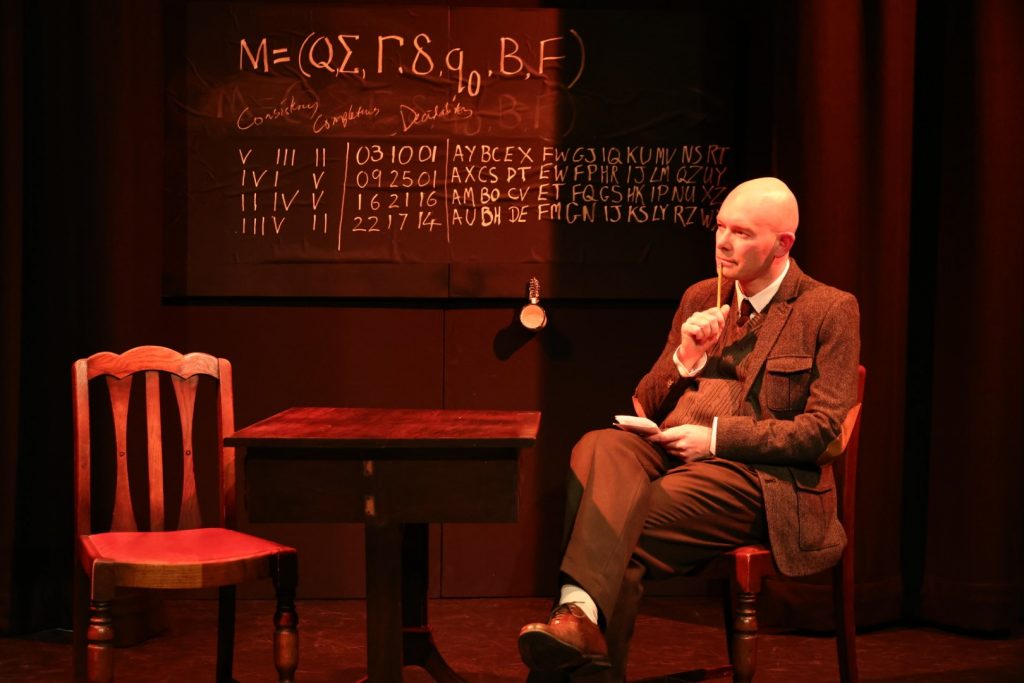
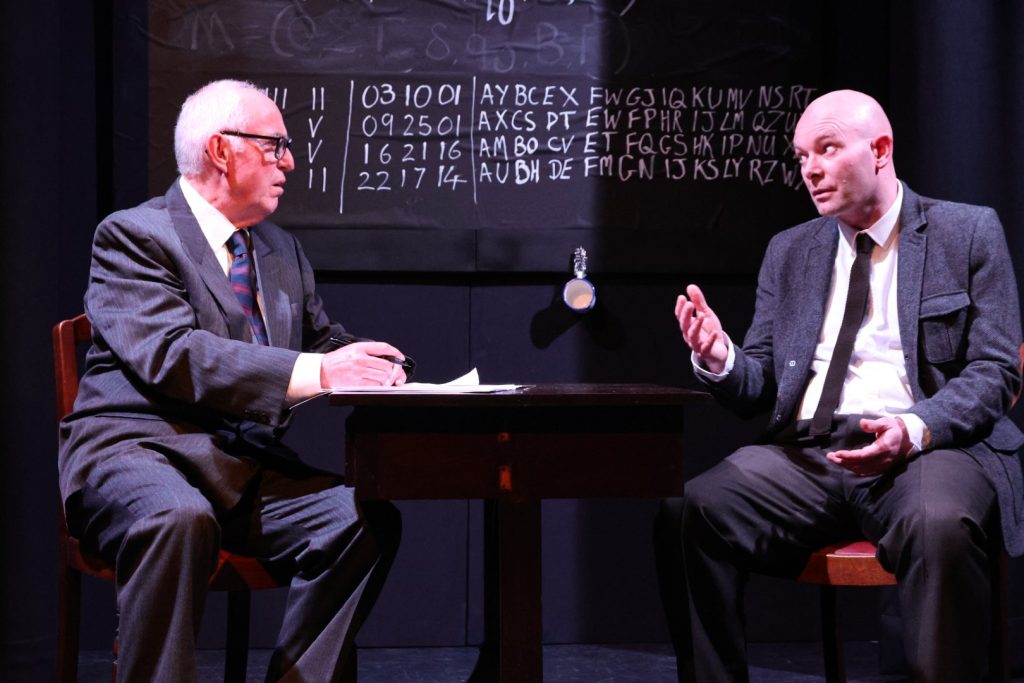
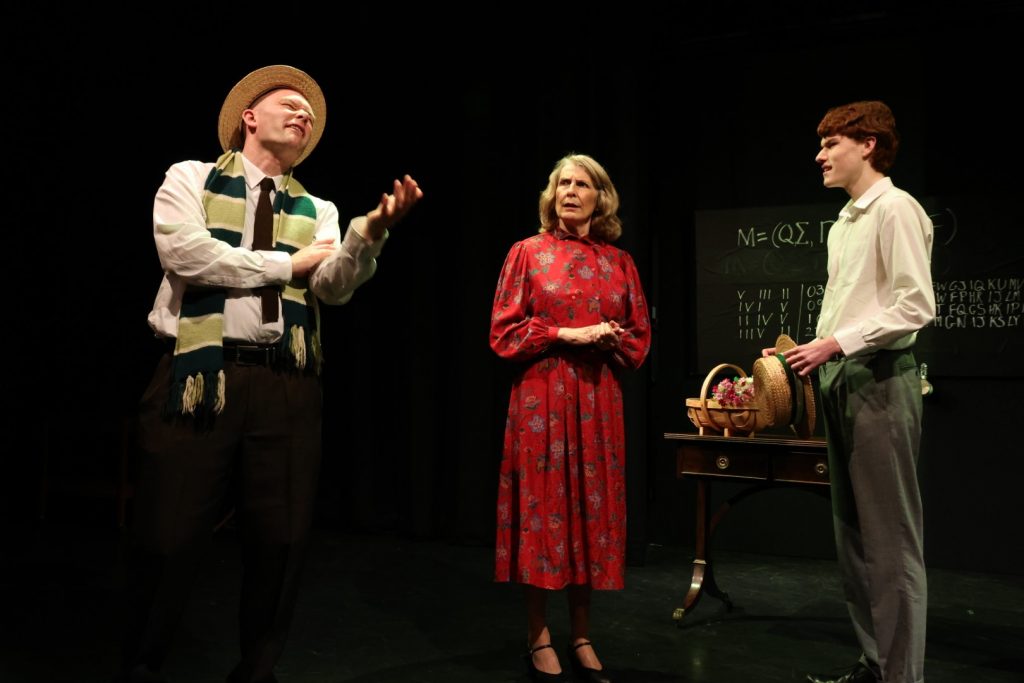
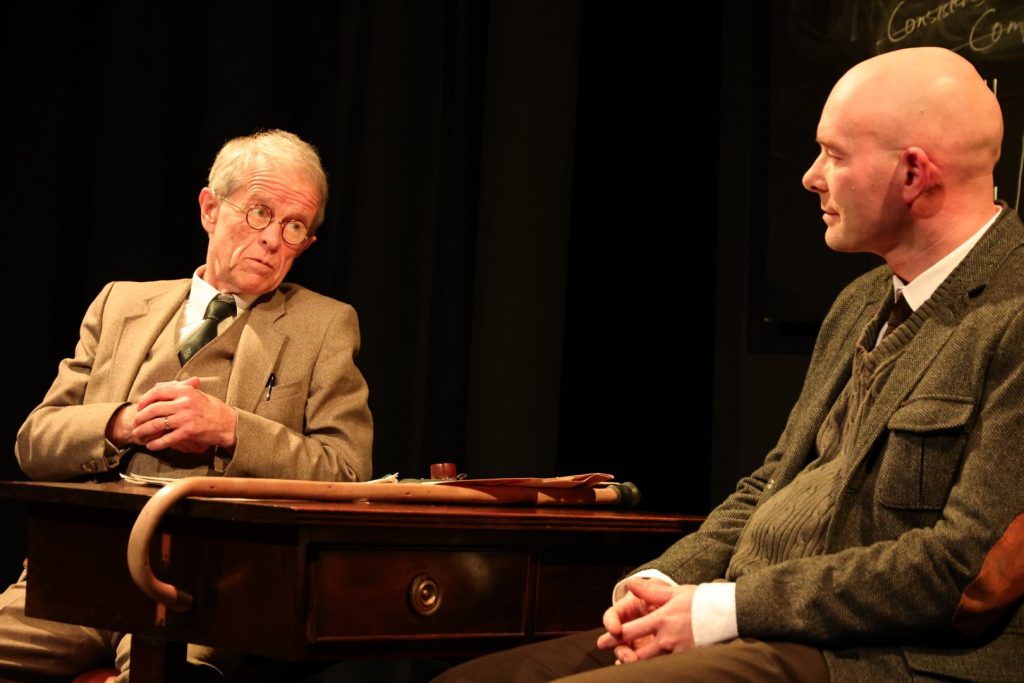
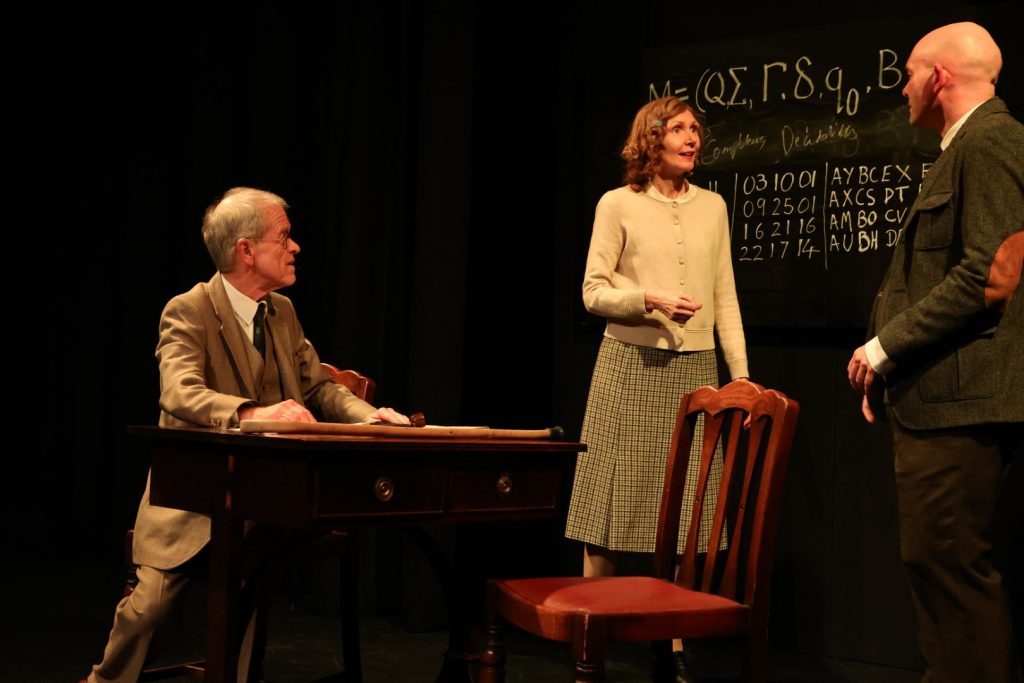
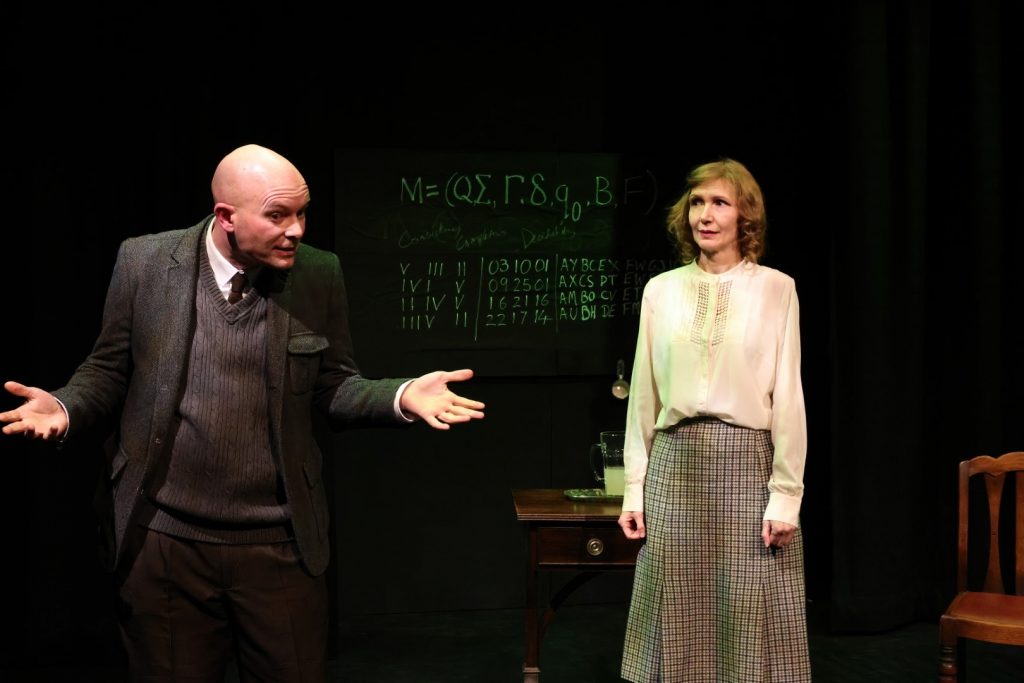
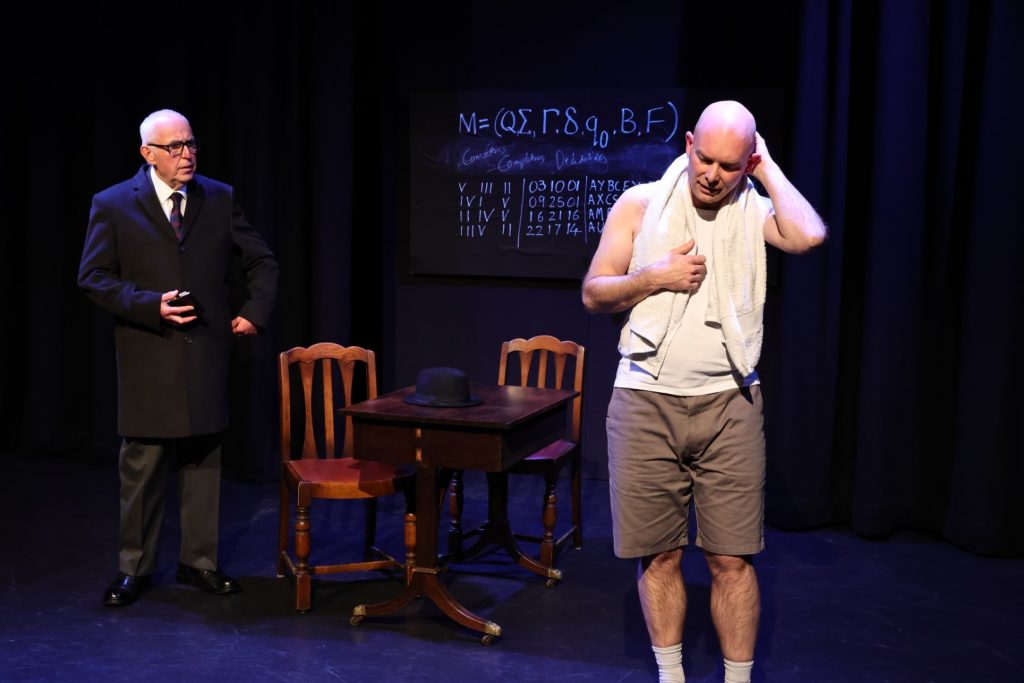
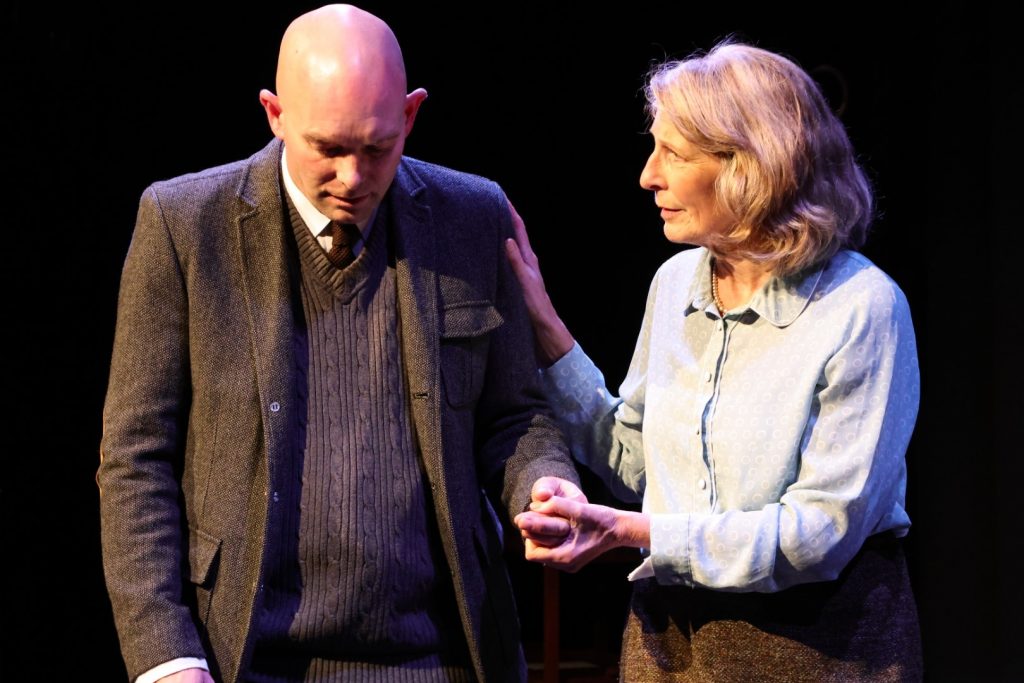
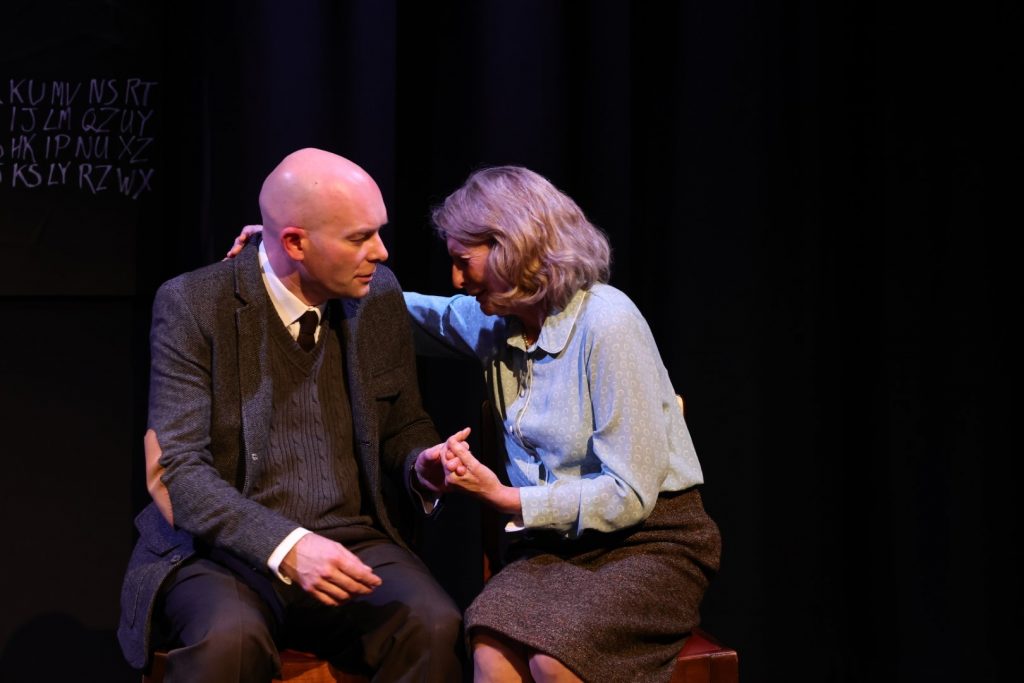
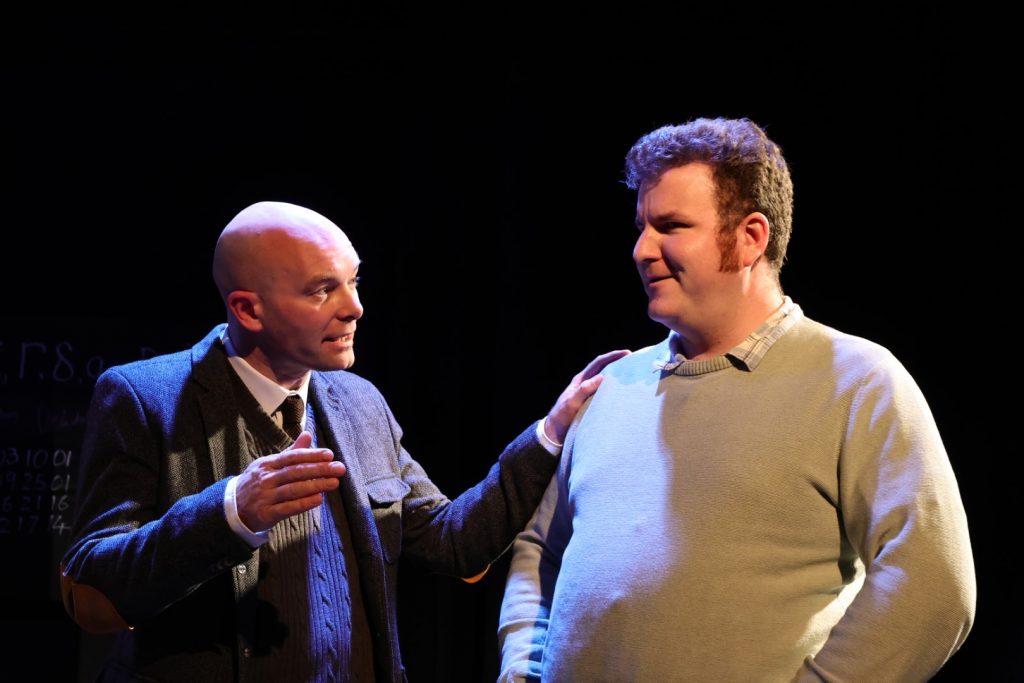
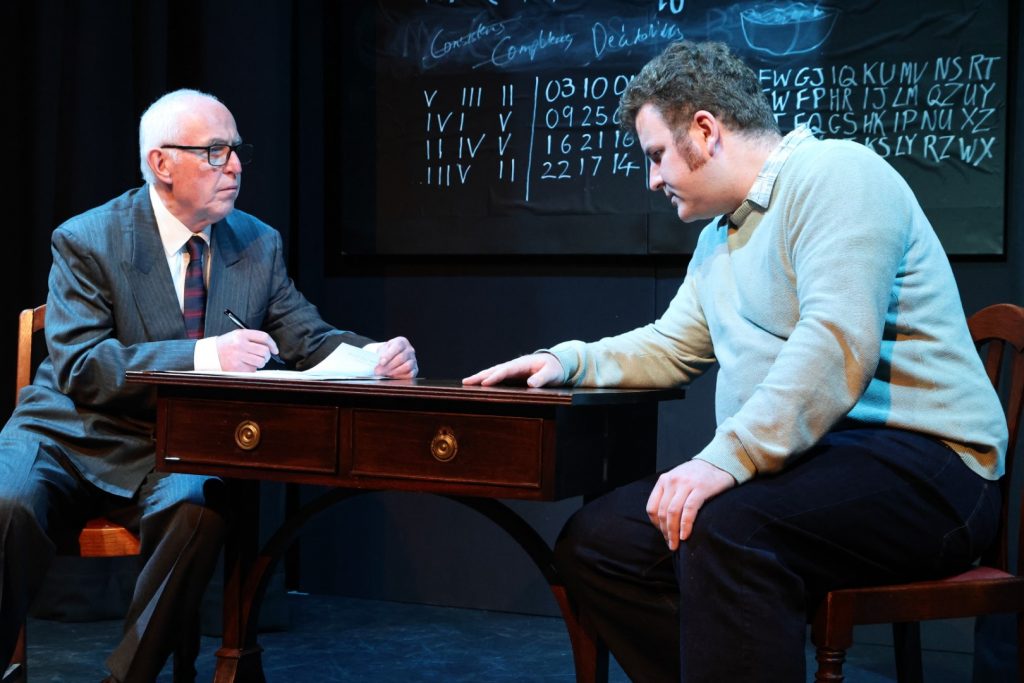
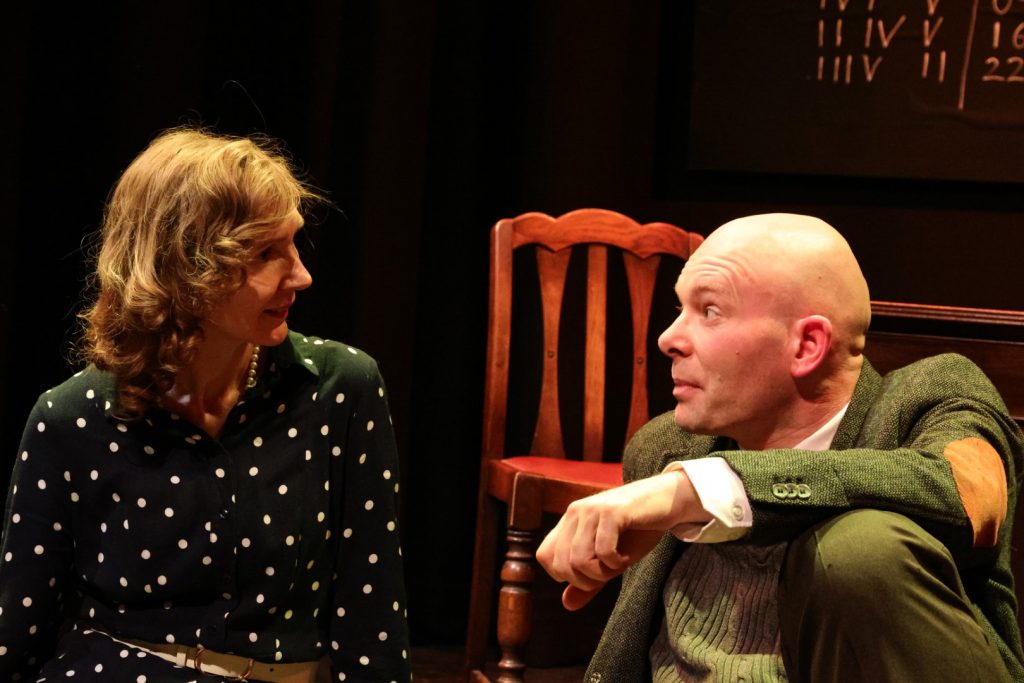
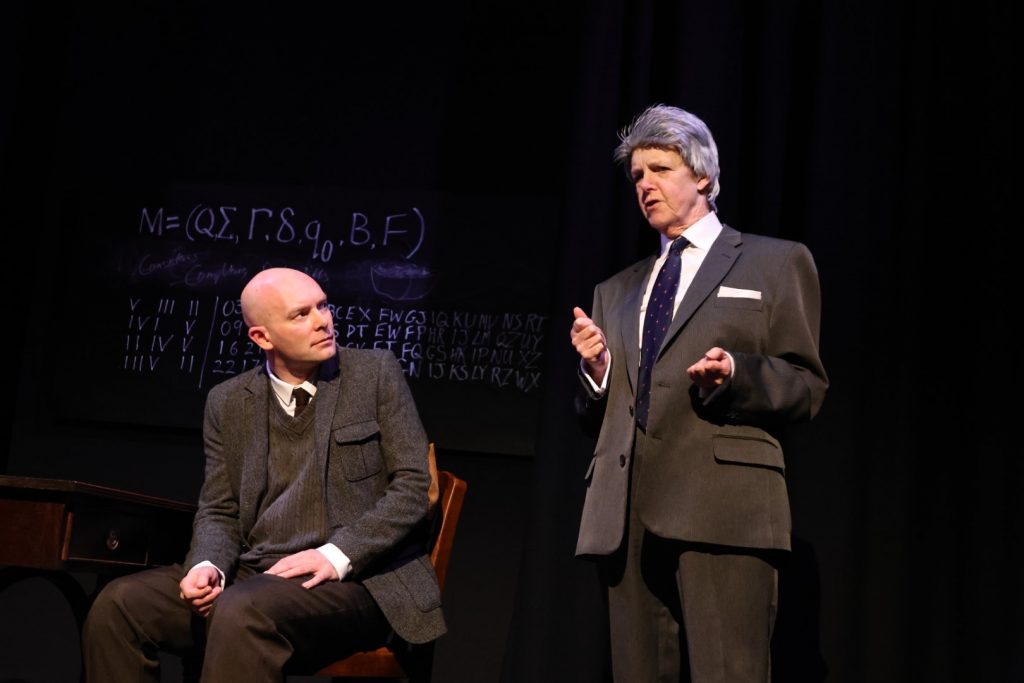
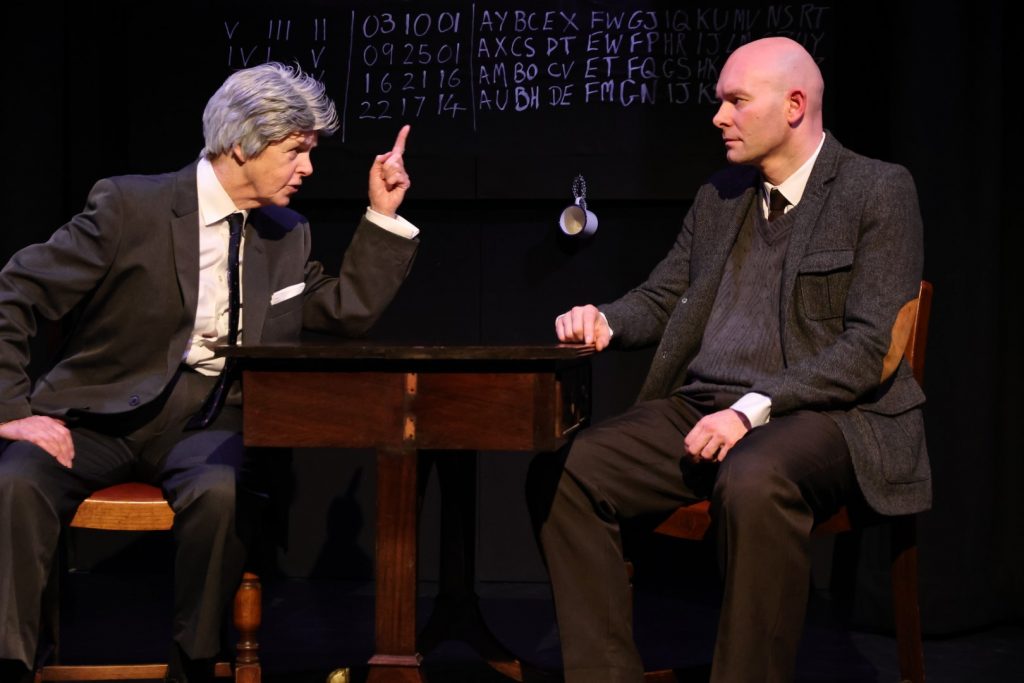
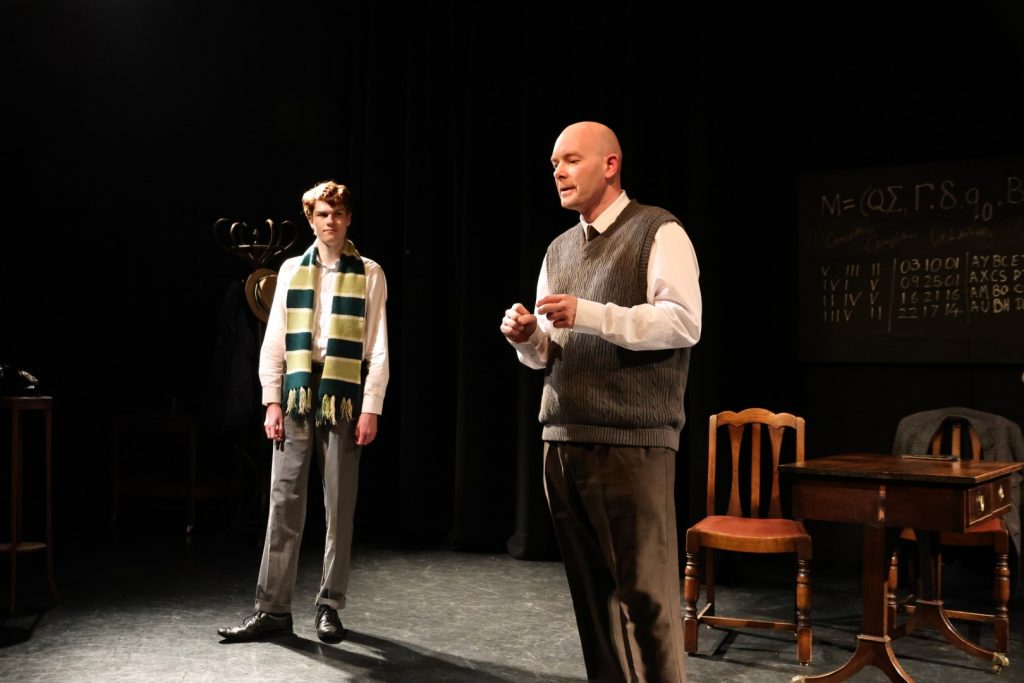
Photos by Ian Dumelow – click to enlarge
Audience Reactions
Really enjoyed ‘Breaking the Code’. Wonderfully directed and acted. Great to see especially as I had dragged neighbours along! Also can’t resist a special mention for Rod – superb. SD
Well, Tony and I would like to add our applause to the cast too, what a masterful performance! We were enthralled and so impressed by everyone but particularly with Chris Lang, he was incredible! AC
Review – ‘…magnificent portrayal of Alan Turing…
“What I found exceptional about this production was the way the audience was riveted, both by complex mathematical and philosophical ideas one minute, and moved to tears the next by the human need for love and to be understood. <<EXPAND>>
Alton Fringe Theatre, now in its 35th year, has triumphed again with its latest production Breaking the Code by Hugh Whitemore. It is the story of Alan Turing, mathematician, cryptographer, and computer scientist, best known for his work at Bletchley Park during WW2 breaking the German Enigma code. This is not the only code to which the title refers and during the play we see Turing ‘break’ the moral code imposed on him by the society of his time which criminalises him for being a homosexual man.
Whitemore’s Turing asks himself and us questions of identity, truth, right and wrong. We enter his mind, its reach and originality, and when he poses the question: ‘can a machine think?’ he foresees artificial intelligence, a reality we now live with. What I found exceptional about this production was the way the audience was riveted, both by complex mathematical and philosophical ideas one minute, and moved to tears the next by the human need for love and to be understood. This was down to the intelligent, sensitive direction of Steve Gerlach and the conviction and brilliance of the whole cast and creative team.
Julian Chou-Lambert’s powerfully evocative soundscape immediately grabbed our attention, hooking us in at the start of the play. Repetitive, mechanical sounds suggested both the whirring of machines and Turing’s mind. The use of this richly textured sound added emotional depth, not least when underlining one of Turing’s most affecting, climactic speeches disclosing classified information about breaking the Enigma code. It was a perfectly attuned piece of theatre.
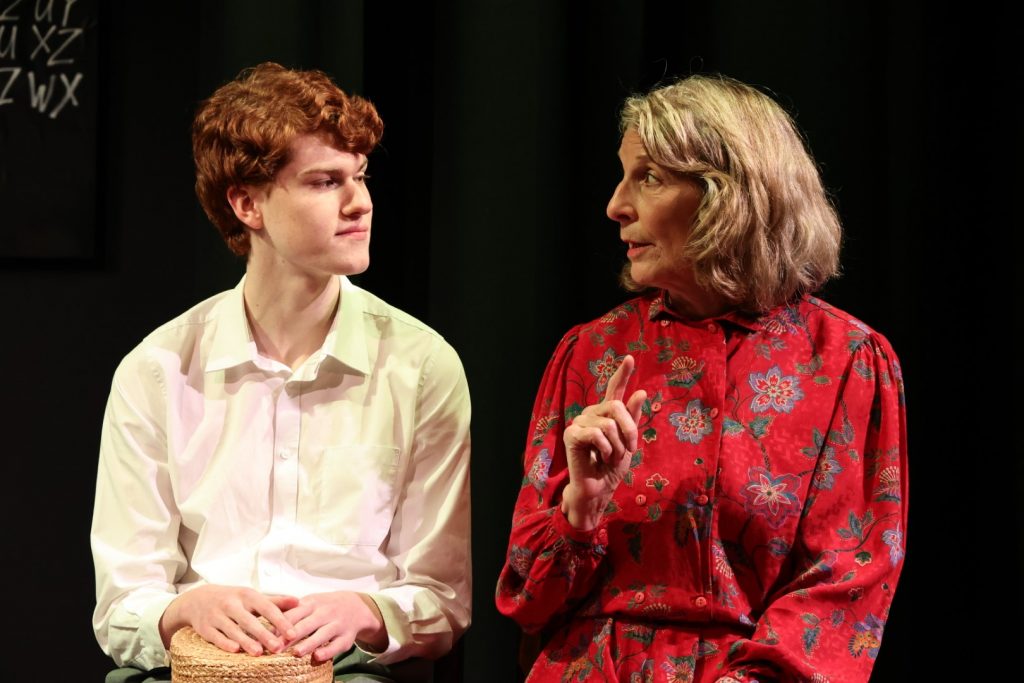
Central is Chris Lang’s magnificent portrayal of Alan Turing, capturing his arrogance and vulnerability, self-belief and naivety. The stammering was well-judged, indicating his state of mind; absent when explaining his ideas, prominent when under pressure or fearful. I was invested in Chris Lang’s Turing all the way to his shocking death. The direction of the play enabled us to see it as a love story between Alan and his school friend Christopher Morcom, subtly indicated when Alan drapes his school scarf over Christopher’s shoulders. Turing, one feels, never gets over Morcom’s early death. Matthew Twaite played Christopher with a natural ease and confidence.
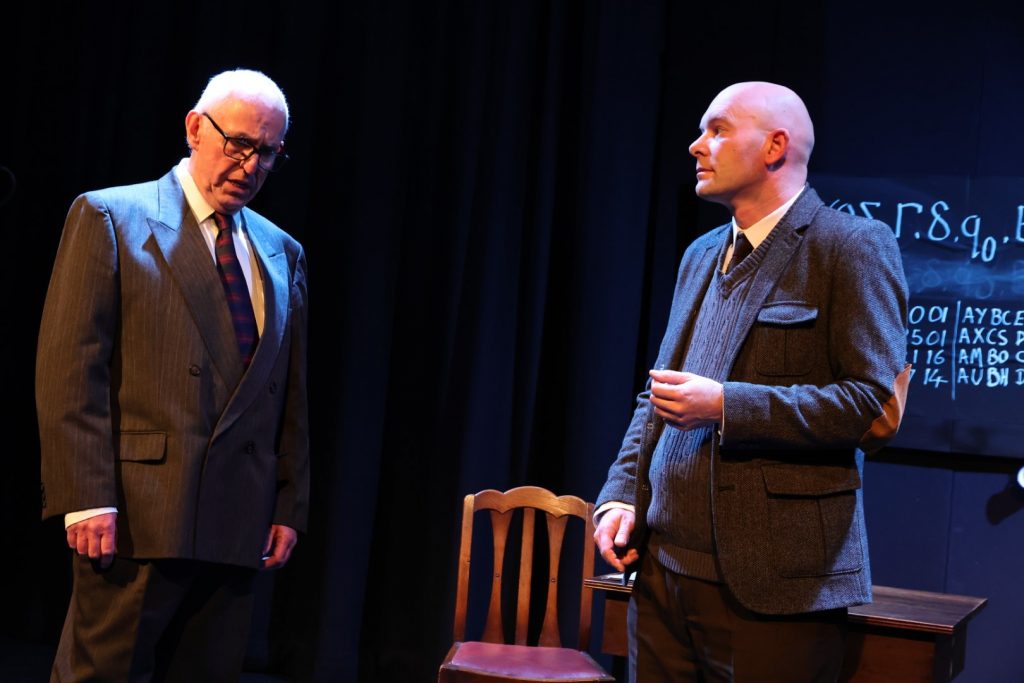
The play is structured around a series of interviews between Det. Sergeant Ross and Turing. Simon Applegarth’s Ross is totally convincing. There is a moment towards the end of Act I when he visits Turing at his home and simply by the way he stands, not moving or speaking, you know everything; that he has rumbled Turing’s cover story. Both Ross, and later Turing’s mother, ask the same incredulous question ‘why?’ – referring to Turing’s confession of his sexual relationship with another man. It is motivated by their frustration at his naivety but was hanging in the air at the end of the play after Turing’s senseless death.
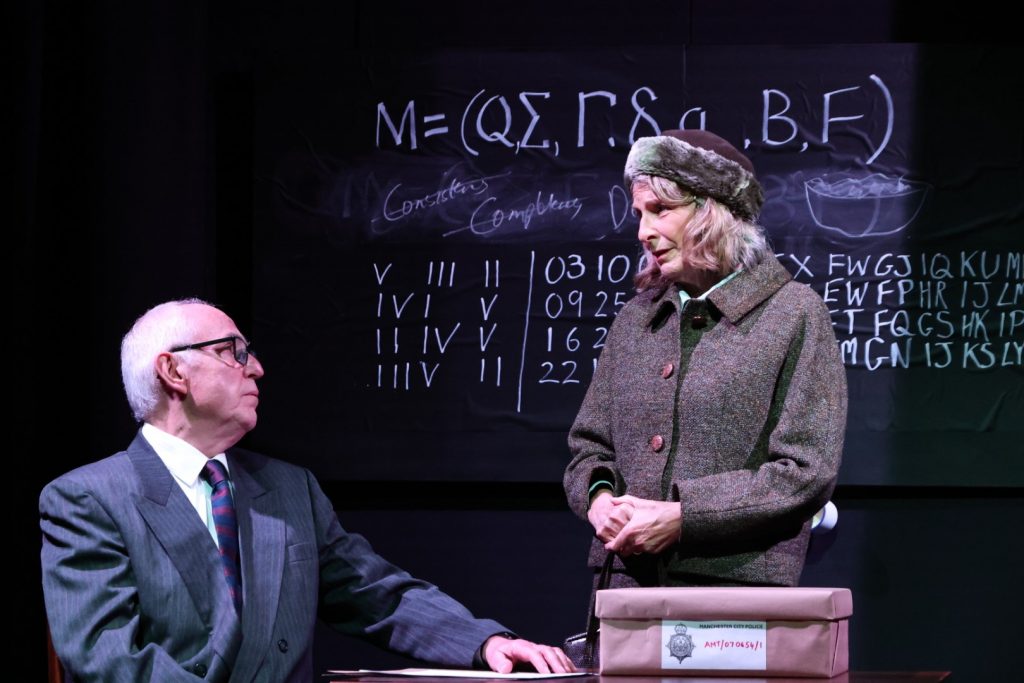
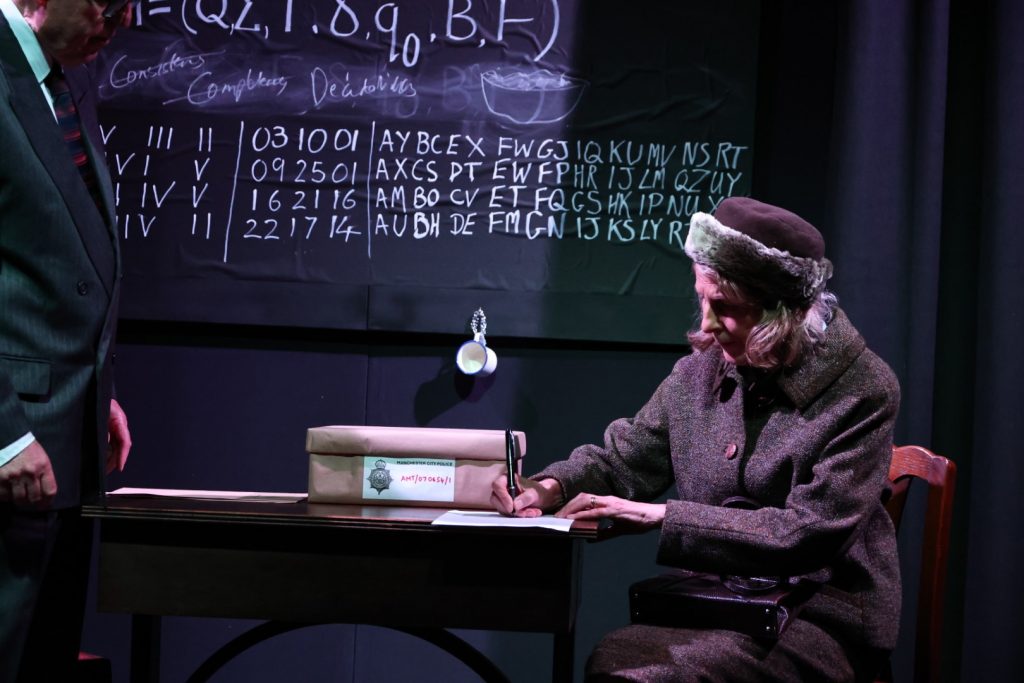
Jane Samways’ exquisite performance as Turing’s mother has emotional depth and range which moved the audience to tears on both evenings I saw the play. The impact of her final scene when collecting his belongings from the police station is shatteringly dignified. The other female character Pat Green, was played in a convincing, unassuming way by Lisa Felix. I loved her youthful enthusiasm when she is introduced to her ‘hero’ Turing at Bletchley.
Contrasting with Ross’s world-weary police officer is MI5’s John Smith, urbanely portrayed by Sarah Castle-Smith and embodying the establishment. Her portrayal cleverly highlights Turing’s position as an outsider, not only because of his unwillingness to hide his sexuality, but by his disregard for the codes of the old boys’ network.
Turing’s sexuality takes him to the fringes of society where he encounters Ron Miller – ‘a bit of rough from the Oxford Road.’ Joe de Peyrecave-Moore brought out the complexity of this character with skill and great emotional depth. You sensed his suppressed violence which, when it flared into anger and ridicule, was shocking. When he signs his confession, he is anxious and diminished by shame.
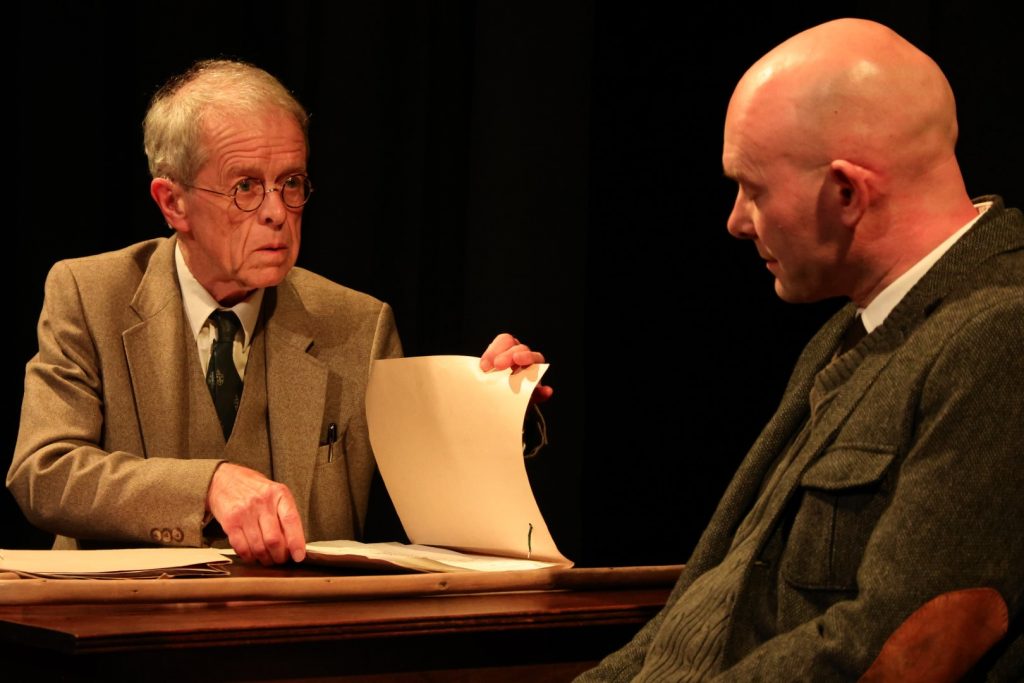
The flashbacks to WW2 and Bletchley Park are vividly brought to life in the character of the head of operations, Dilly Knox, played by Rod Sharp, who gives a consummate performance of this eccentric individual. Despite Knox’s frailty and failing memory, we are in no doubt of his sharp intelligence and judge of character. The exchanges between him and Turing are pacy, serious, funny and completely engrossing – acting of a very high order.
Mention must be given to the informative, interesting programme providing context and insight into the production. The cover design with a fine pen portrait of Turing by Helen de Peyrecave is arresting. The simple set – a hallmark of many a Fringe production – a table and two chairs, enables focus on the acting. The play’s chronology is shaped by the police interviews interspersed with flashbacks to earlier periods in Turing’s life. Efficient scene changes, costume and lighting effects aided the actors’ pacy and clear storytelling
Knox’s parting words of warning to Turing stayed with me as a challenge for our time. He is quoting Wittgenstein: ‘We feel that even when all possible scientific questions have been answered, the problems of life remain completely unanswered.’ Turing struggled to find a way, or in the end a reason, to live, and committed suicide. The question how to live, be a human being in an age increasingly dominated by technology, is one we face now. Perhaps a start is to continue supporting live arts events which offer a collective experience in real time and space bringing us together in our shared humanity.
Jo Hopkins
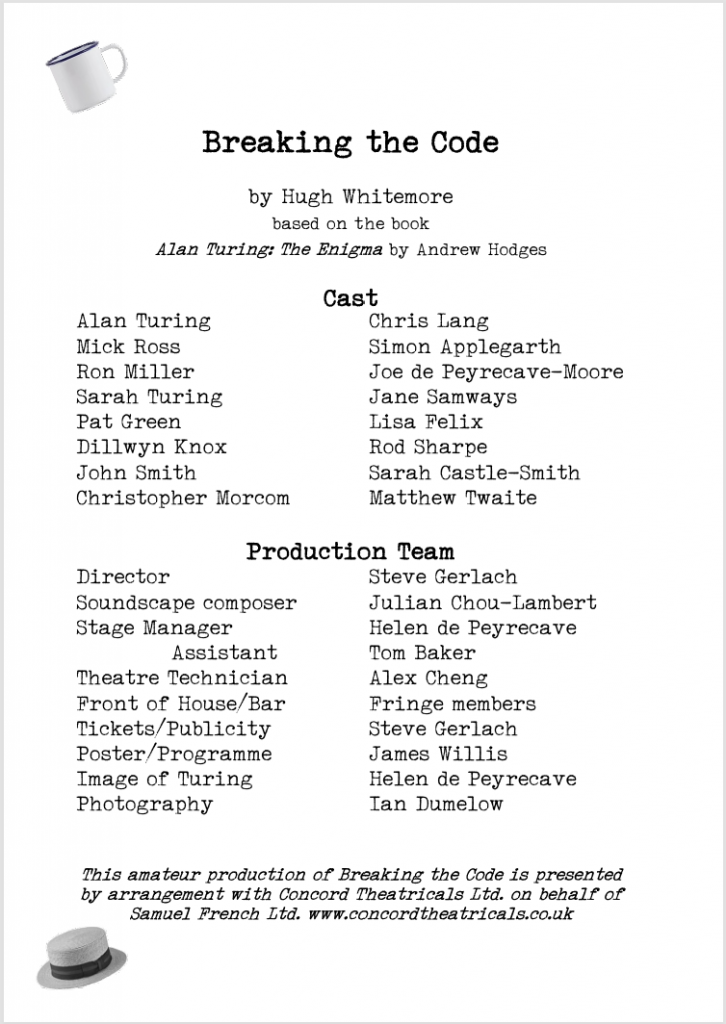
This amateur production of “Breaking the Code” was presented by arrangement with Concord Theatricals Ltd. On behalf of Samuel French Ltd.