

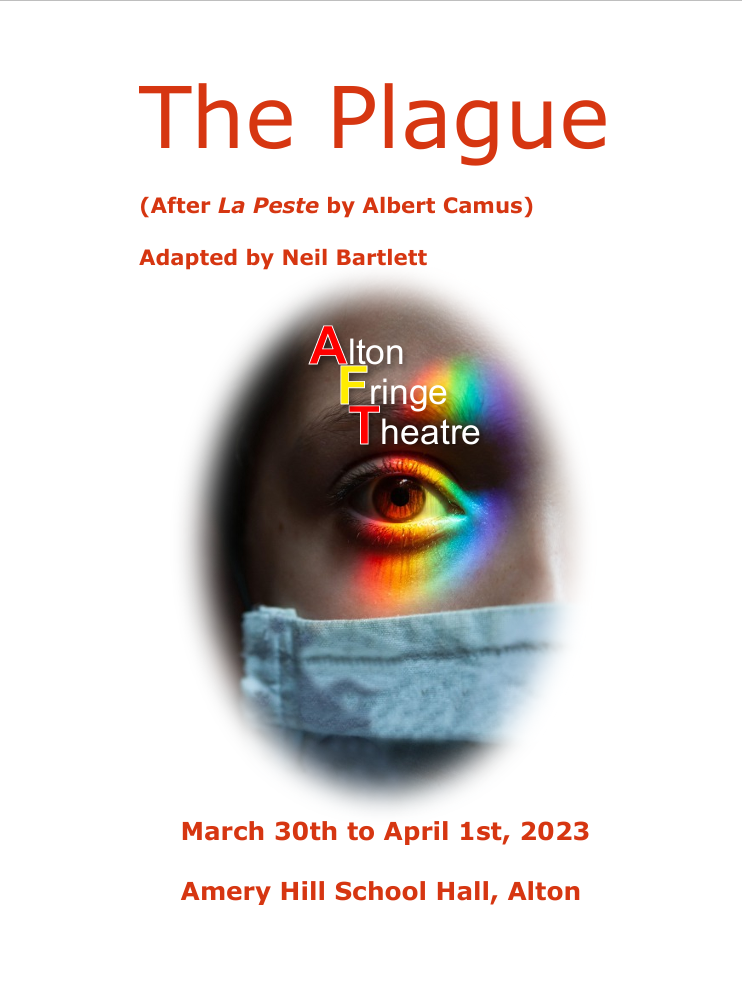
Adapted by Neil Bartlett after La Peste by Albert Camus
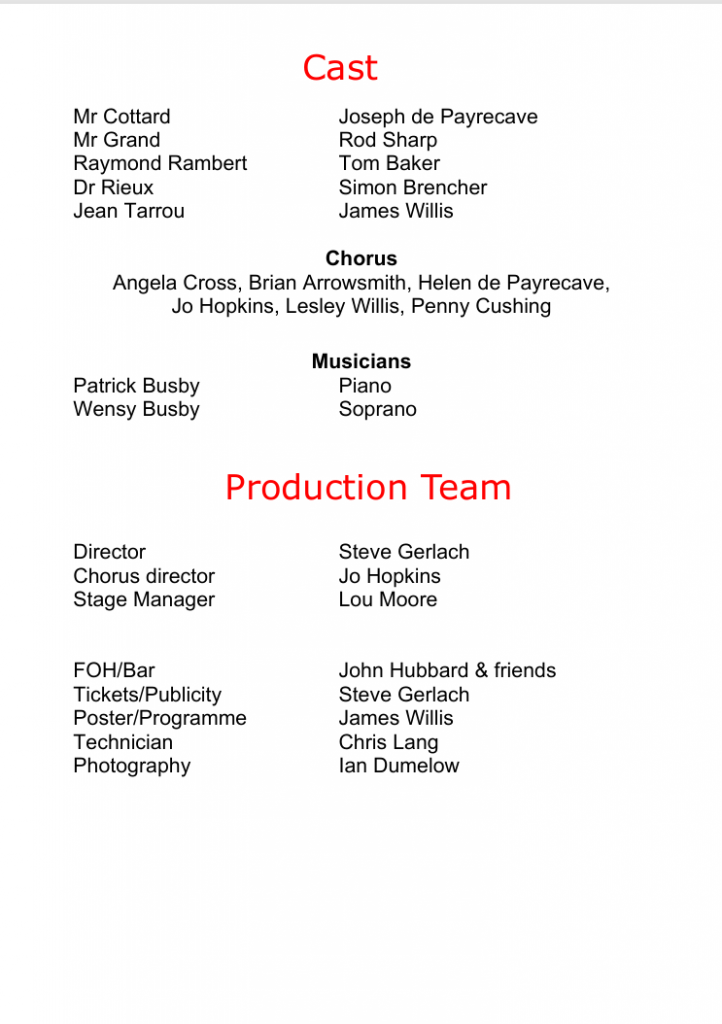
Directed by Steve Gerlach Chorus directed by Jo Hopkins
The Plague was performed in Amery School Hall on 30, 31 March and 1 April, 2023
“The professionalism, the commitment and the integrity of the cast, chorus and musicians made for a truly moving and inspiring evening…”
Review
I begin with a confession: I had never been to an Alton Fringe production before this one, despite having lived in Alton for many years. Having seen their production of Neil Bartlett’s “The Plague”, I am now a convert, and shall endeavour not to miss any of their future productions. The professionalism, the commitment and the integrity of the cast, chorus and musicians made for a truly moving and inspiring evening at Amery Hill School, CLICK for MORE,
whose hall space was exploited to the full by director Steve Gerlach.
This production was an unusually long time in the making. AFT first read through the play in January 2020 with a view to putting it on later that year, but were prevented from doing so by the emergence of Covid-19. This modern “plague” and its impact on us all gives the play an extra, unintended, contemporary relevance (it was written pre-Covid), but the company was wise not to labour the parallels with the pandemic: Camus’ plague is after all an allegorical one. There were – mercifully – no lecterns or pithy slogans, though the one throwaway reference to the “uselessness” of masks did draw the biggest laugh of the evening.
Even before the play began, expectations were high after a perusal of the programme, which contained more relevant and helpful information than is often provided in West End theatres.
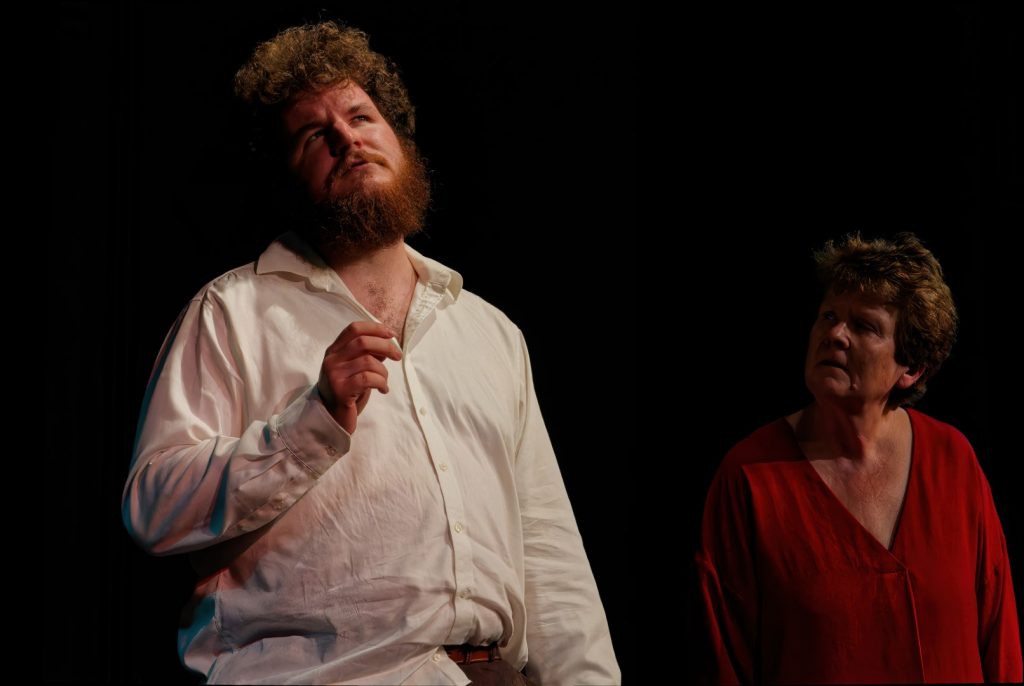
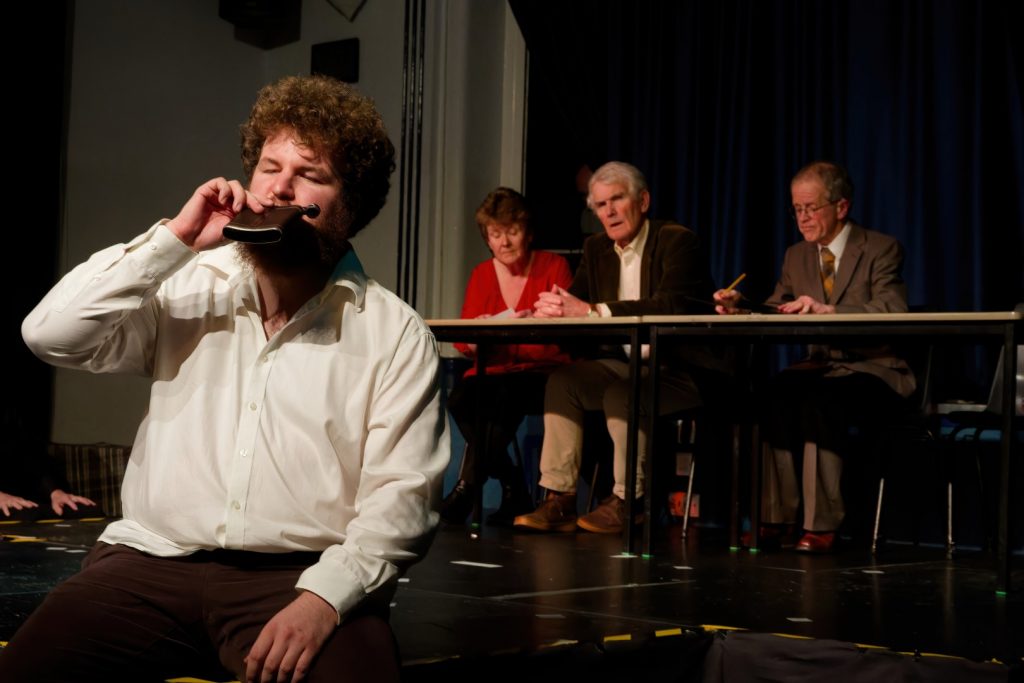
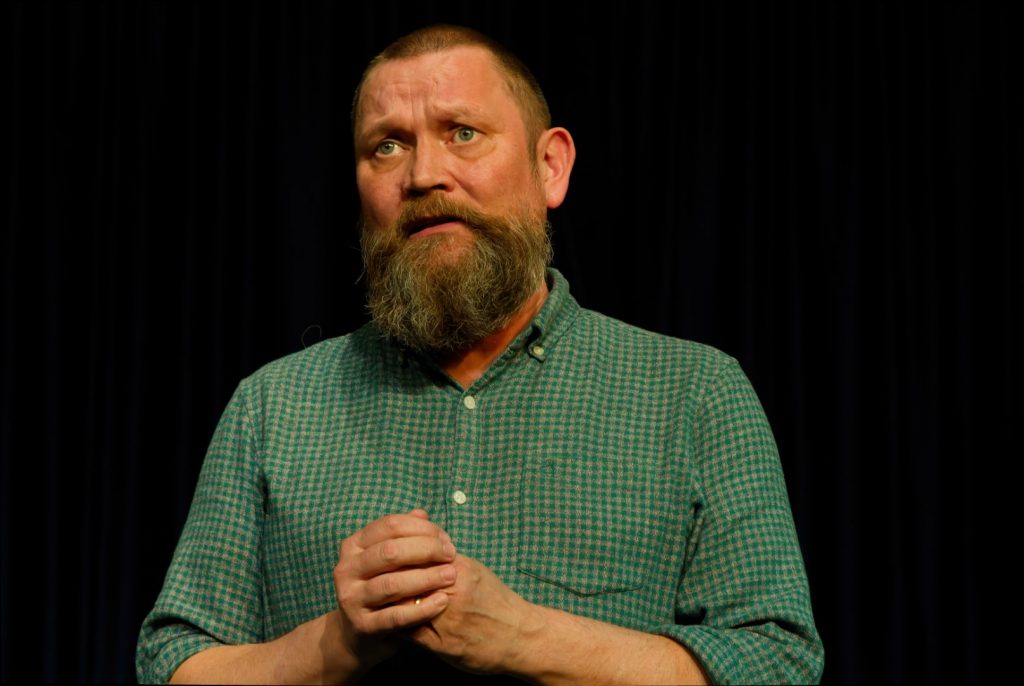
Dr Rieux (Simon Brencher), deep in thought, was joined on stage by the other members of the cast, one by one, and characters emerged before a single word was spoken: the dapper Tarrou (James Willis) warmly greeting the doctor with whom he collaborated closely throughout the epidemic, and Mr Cottard (Joseph de Peyrecave), from the start a brooding presence, nervously wringing his hands. One could sense already the pent-up anger of this tortured, solitary soul.
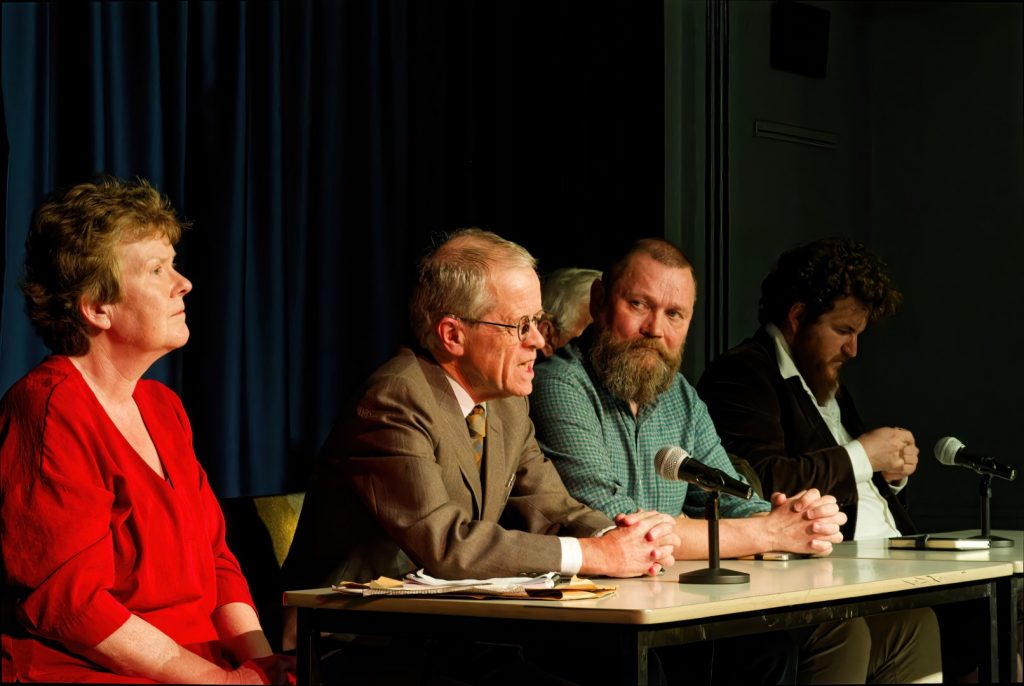
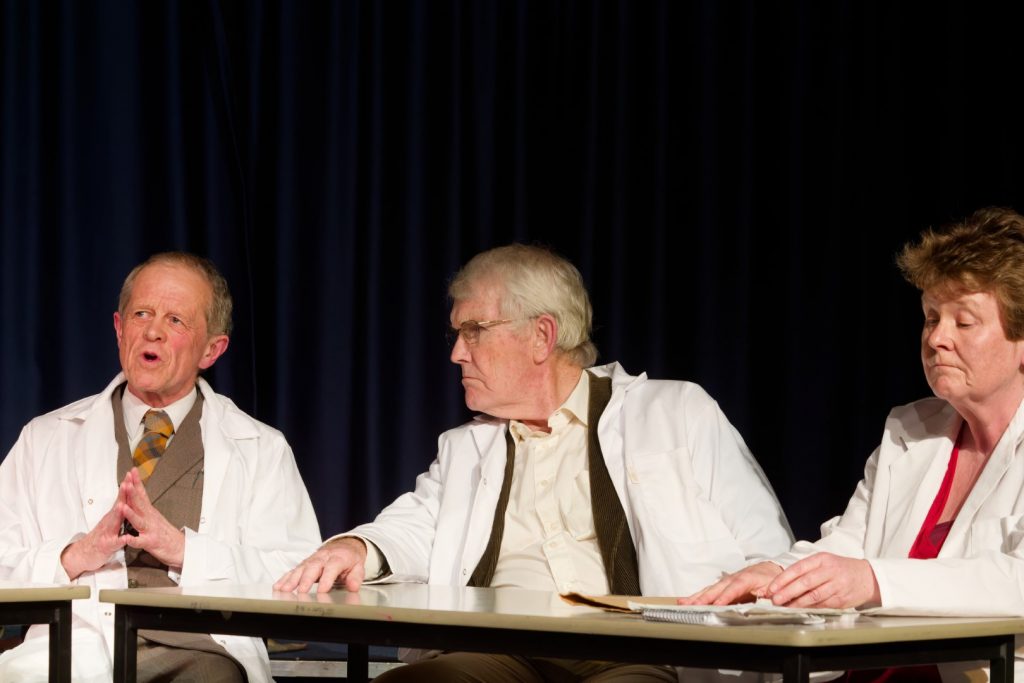
Only a very accomplished cast could have convincingly coped with Bartlett’s demands: he requires them to switch from contributing testimony to the post-plague enquiry to re-enacting the events of the recent past, and, on occasion, to switch into completely different minor characters, such as a committee of doctors discussing how to minimise the crisis. White coats were all that was needed to signal this switch – the versatility of the cast did the rest.
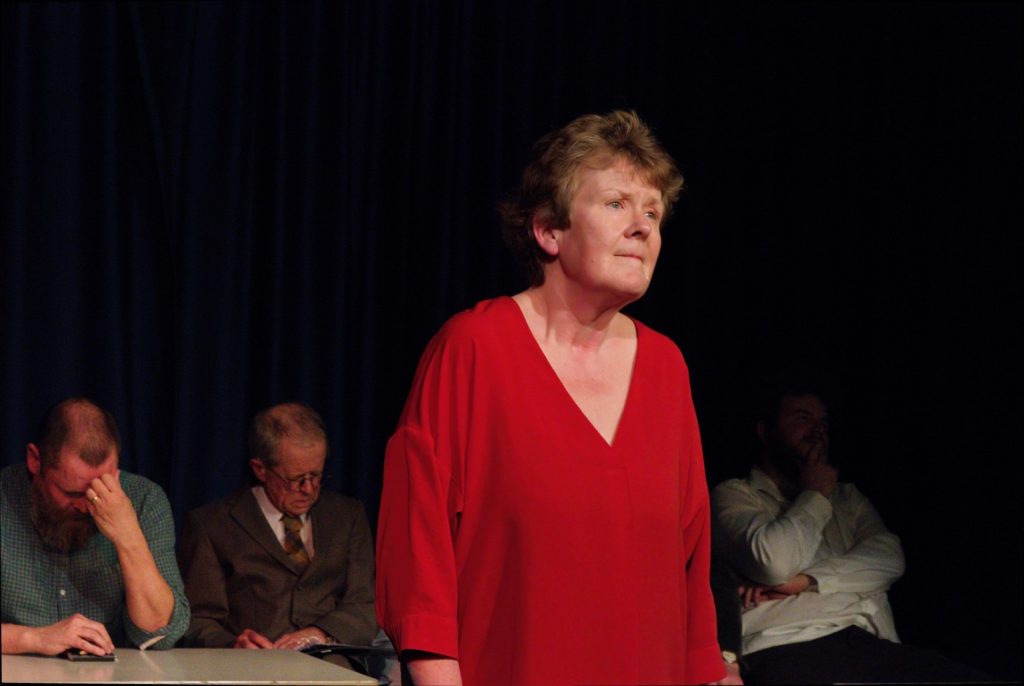
The visiting journalist Rambert (Cath Gerlach) is perhaps the character who changes most in the course of the play, and her journey from silent bemusement at Rieux’ refusal to make moral compromises, via an impassioned defence of the right to seek personal happiness by escaping the closed town, culminating in her decision to stay and to join the teams of volunteers fighting the plague, to contribute to the collective struggle, was both persuasive and touching.
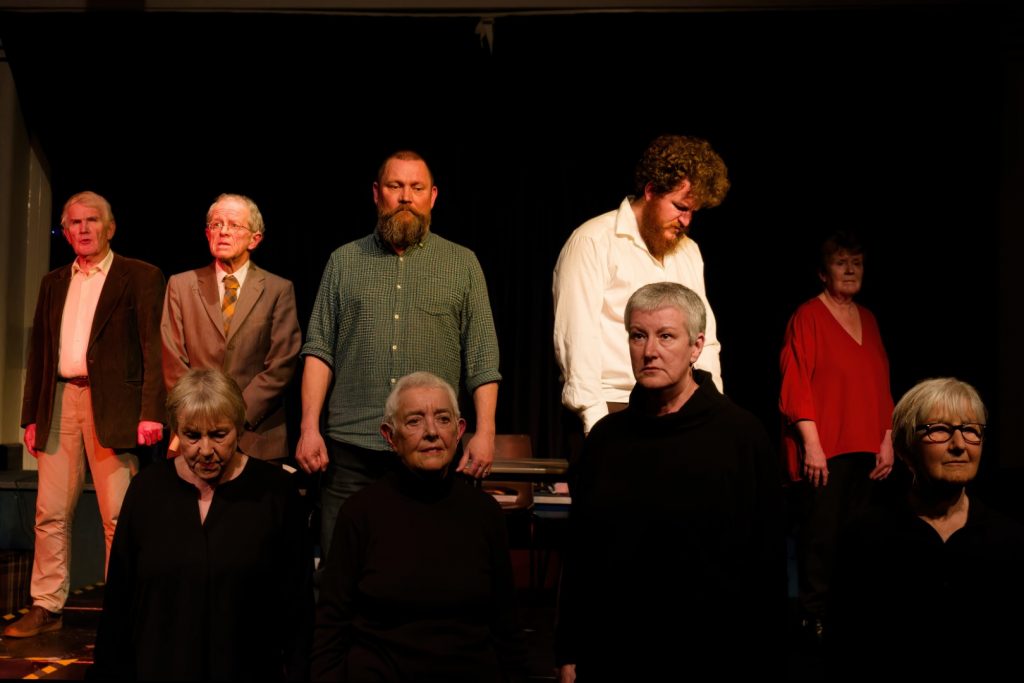
The Chorus played a seminal part in the action: in apt black mourning – they represented the “fellow citizens”, many of whom were being killed off by the plague, now apologising, now confiding, now trying to explain the inexplicable, getting up close to the audience. They had clearly been well drilled by Jo Hopkins: when in unison they sounded almost as one. When intoning as individuals, the broken syntax reflected perfectly the confusion of the townsfolk and their attempt to come to terms with the horror, to bear witness of events they were living through. The music – beautifully performed throughout by Patrick and Wendy Busby – gave the whole production an extra dimension. Atmospheric and allusive from the start, where Orfeo’s lament hinted that Dr Rieux might never again see his sick wife, to the finish, where the major tonality of Strauss’ “Morgen” came as a much-needed ray of light after the long dark night to underscore the excited relief of the Chorus of Hope.
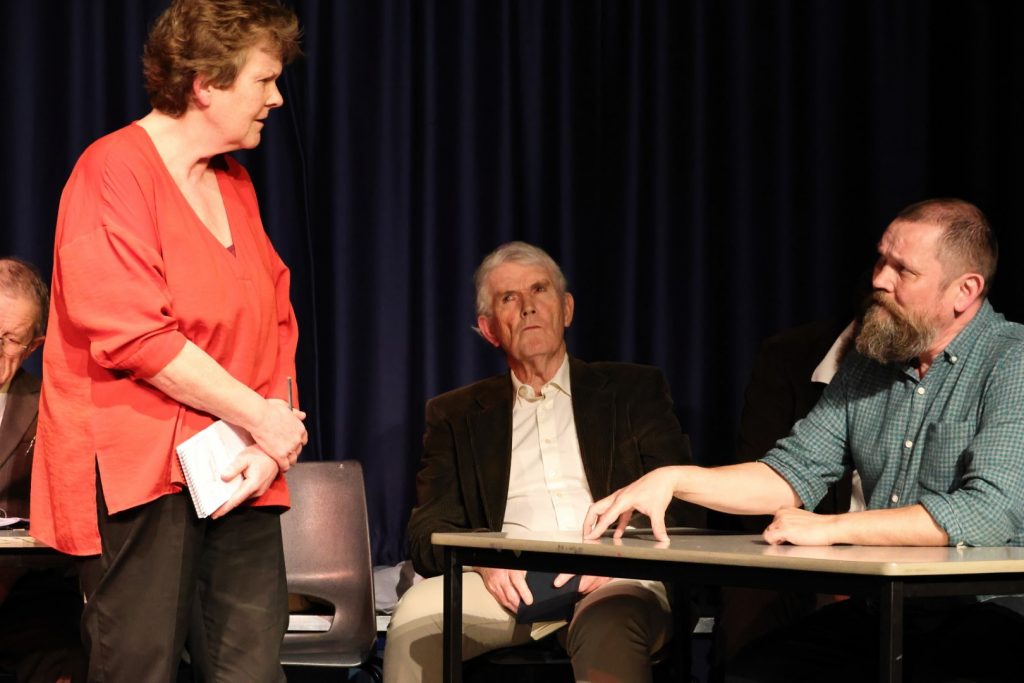
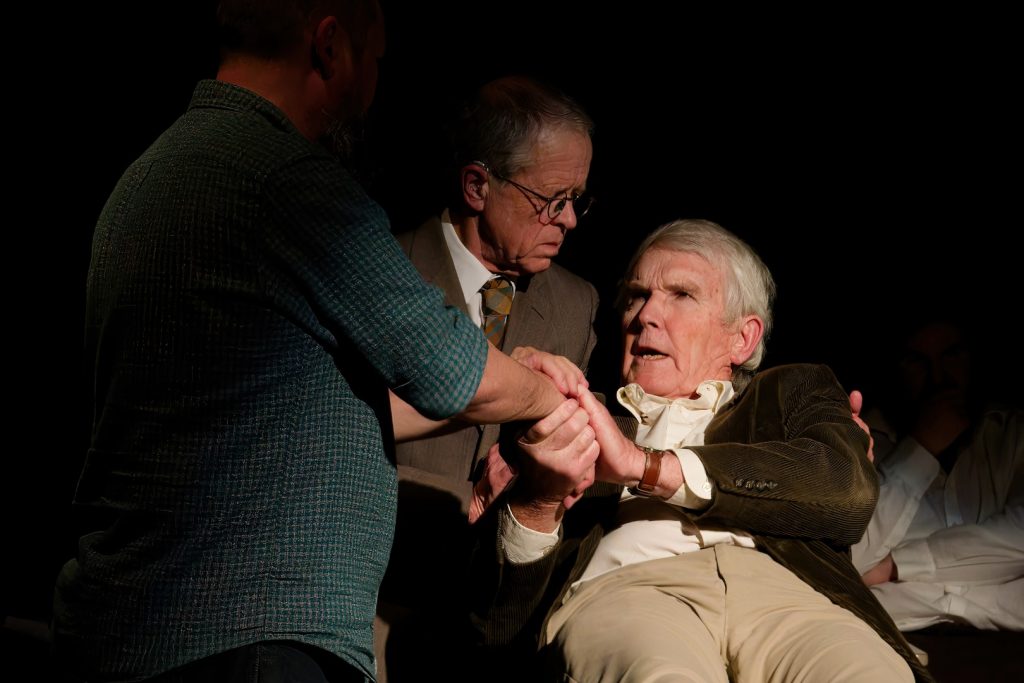
The second half contained some particularly memorable scenes: Rambert talking watery-eyed of the “Christmas from Hell”, the pathos undermined by Cottard’s bitterly sarcastic rendition of “Silent Night”, and then the scene when Grand doesn’t die. This scene could so easily have descended into farce: Grand (Rod Sharp) writhing in agony with plague symptoms, remains pre-occupied with the wording of the first sentence of his letter to his estranged wife. And yet Rod, playing the modest civil servant (his job is to keep statistics of the plague victims) had so gained the audience’s sympathy that there was not a murmur of laughter. Instead, we rejoice at his miraculous recovery the next day and admire his decision to recommence the symbolic struggle to find the right words.
Simon Brencher, as Rieux, the mouthpiece of Camus’ philosophy, so often centre-stage, was a dominating, authoritative figure (with a lot of lines to learn). We felt his exhaustion and his unremitting refusal to accept death and injustice. James Wills as Tarrou, too, in his sincerity and refusal to condemn – his final handshake with Cottard was another moving moment – assists in the ultimately successful attempt to overcome the plague. And even though Rieux reminds us, in those famous last lines, that “the bacillus never actually dies”, even though the off-stage fireworks seemed (and were, intentionally I am sure} rather hollow after all that suffering and death, we experience with him something like what Sisyphus felt (in another famous work by Camus} when he got to the top of the mountain with his rock. A sense of triumph – fleeting certainly, but no less uplifting for all that.
Peter Allwright